
Remember when automation meant setting up simple “if this, then that” rules? Those days feel like ancient history now! Agent SDKs have moved into mainstream developer tooling. Meanwhile, n8n continues to be a favorite for indie developers and automation pros.
But as agent frameworks become more powerful, it’s fair to ask: is n8n enough? Or do you need an agent SDK? This is something we’ve been thinking about a lot at BrownMind, where we help teams move from simple automations to intelligent agents. Let’s break this down without pretending that every workflow needs an AI brain.
The Lightbulb Moment That Changed Everything 💡
Picture this: I’m sitting at my desk at 2 AM, debugging yet another n8n workflow that’s supposed to qualify leads automatically. It worked perfectly… until it didn’t. A prospect sent an email that was slightly different from what I’d programmed for, and my beautiful automation just gave up.
That’s when it hit me, “I wasn’t building smart systems”. I was building elaborate domino chains that fell apart the moment someone sneezed differently!
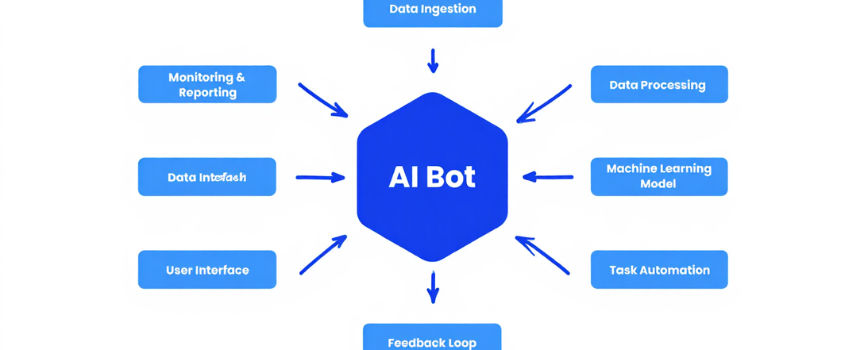
Decoding the AI Agent Mystery 🔍
So what exactly makes an AI agent different from your typical chatbot? Think of it this way:
A basic chatbot is like a really smart parrot. It can respond brilliantly to what you say, but the simplest versions don’t choose tools or plan a sequence of actions.
An AI agent is like hiring a super-powered intern. Give it a bounded goal and an approved toolset, and it can research competitors, summarize findings, keep useful context, and decide which tool to try next. Like an intern, it still needs supervision.
The magic happens when these agents can:
- Plan their own steps toward a goal
- Use external tools and APIs intelligently
- Store and recall important information
- Adapt when things don’t go as expected
My 5 Levels of AI Automation (And Where You Probably Are) 📊
Here’s something I wish someone had explained to me earlier: not all “AI automation” is created equal. This is my working model, not an industry standard, but it helps me decide how much autonomy a system really needs.
Level 1: Tool-Using LLM 🔧 What it does: Calls an AI model within a fixed workflow Perfect for: Email summarization, content generation My take: This is where most people start, and n8n absolutely shines here!
Level 2: Reactive Agent 🎯
What it does: Uses memory and conditional logic to respond intelligently Perfect for: Smart auto-replies, context-aware customer service My take: n8n can handle this with some clever workflow design
Level 3: Autonomous Agent 🚀 What it does: Plans and executes multi-step tasks independently Perfect for: Competitor research, content pipeline automation My take: This is where agent SDKs start to outshine traditional workflows
Level 4: Multi-Agent System 👥 What it does: Multiple specialized agents collaborate like a team Perfect for: Complex content production, research projects My take: Now we’re in serious agent SDK territory!
Level 5: Goal-Oriented System 🎯 What it does: Solves complex, long-term problems with feedback loops Perfect for: Strategic planning, adaptive business processes My take: Custom agent frameworks are your best bet here
Why I Still Love n8n (And When It’s Perfect) ❤️
Don’t get me wrong: n8n isn’t going anywhere! There’s something beautifully satisfying about building visual workflows that just work. Here’s when I still reach for n8n:
The Sweet Spot Scenarios
- Lead qualification pipelines where you know the exact steps
- Appointment booking systems with predictable user flows
- Data processing tasks that follow clear rules
- API integrations that need reliable, repeatable processes
- MVP development when you need to ship fast and iterate
I recently built a voice-based lead handling system using n8n that combines Deepgram for speech-to-text and ElevenLabs for text-to-speech. The workflow was crystal clear, the logic was predictable, and it deployed in hours, not days.
The Great Agent SDK Awakening 🌅
But then came the day I needed to build something that could research competitors and adapt its strategy based on what it found. That’s when n8n hit its limits, and I discovered the power of agent SDKs.
When n8n hit its ceiling
Instead of manually programming every possible scenario, I could simply tell an agent: “Research our top 5 competitors and analyze their pricing strategies.”
The agent would then:
- Decide which search tools to use
- Navigate to competitor websites
- Extract relevant pricing information
- Synthesize findings into actionable insights
- Adapt its approach if it hit roadblocks
This isn’t science fiction. It’s happening right now with frameworks like CrewAI, LangChain, and the OpenAI Agents SDK.
📈 Autonomy vs. Task Complexity
 Autonomy
|                    Agent-SDKs
|                  /
|               /
|            /
|       n8n
|     /
|  /
|---------------------------->
   Task-Complexity
The Showdown: Workflow vs Agent 🥊
Let me paint you a picture with a real scenario I faced last month:
The Challenge: Analyze competitor content strategies
The n8n Approach
- Manually configure web scraping endpoints
- Pre-define which websites to visit
- Hardcode content extraction rules
- Build separate workflows for each competitor
- Hope nothing changes on their websites
The Agent SDK Approach
- Give the agent a simple goal: “Analyze competitor content”
- Watch it intelligently browse websites
- See it adapt to different site structures
- Get contextual analysis that considers the full picture
- Enjoy automatic retry and error handling
For this kind of open-ended research, the agent approach took less time to build and delivered a more useful result. Mind = blown! 🤯
Making the Switch: My Personal Decision Framework 🤔
After building systems at both ends of the spectrum, here’s my go-to decision framework:
Stick with n8n when
- Your process has predictable, well defined steps
- You need a visual representation of your workflow
- You’re building an MVP or proof of concept
- Your team prefers no-code/low-code solutions
- The task complexity is low to moderate
Graduate to Agent SDKs when
- You find yourself constantly updating workflows for edge cases
- The task requires dynamic decision making
- You need the system to collaborate across multiple roles
- Adaptability is more important than predictability
- You want to set goals, not micromanage steps
🔬 Comparison Table
| Feature / Capability | n8n-led workflow | Code-first agent SDK |
|---|---|---|
| Visual Builder | Core strength | Usually code-first |
| API Integration | Built-in nodes and HTTP calls | SDK or application code |
| LLM Integration | Supported | Supported |
| Memory Support | Available through connected nodes | Defined in code and runtime |
| Tool Selection | Available inside AI Agent nodes | Fine-grained and code-controlled |
| Goal-Based Planning | Possible in a bounded agent step | A core design pattern |
| Multi-Agent Collaboration | Possible through orchestration | More customizable |
| Best for MVPs | Strong when the flow is visible | Strong when behavior is custom |
| Best for Autonomy | Good inside workflow boundaries | Better for bespoke control |
That table is deliberately less dramatic than my original version. n8n now supports models, tools, memory, and agent nodes, so saying it cannot select tools is no longer fair. The real difference is where you want the control to live: in a visual workflow, in application code, or in a hybrid of the two. The current n8n AI Agent documentation and OpenAI Agents SDK documentation show how much those two worlds now overlap.
Pro Tips from the Trenches 💪
Start Simple, Think Big: I always begin with n8n for new ideas. It’s faster to prototype and easier to explain to stakeholders.
Embrace the Hybrid Approach: Sometimes I use n8n to handle the predictable parts and call agent SDKs for the complex reasoning. This hybrid workflow and agent approach has become a go-to in our client work.
Don’t Fear the Learning Curve: Agent SDKs seem intimidating, but the investment pays off when you need true intelligence in your systems.
Monitor and Iterate: Agents can surprise you (in good and bad ways). Build in monitoring from day one.
The Future Is Collaborative 🚀
Here’s what excites me most: we’re not choosing between workflows and agents, we’re learning when to use each tool in our arsenal.
I recently built a content production system where:
- n8n handles content scheduling and distribution
- An agent researches trending topics
- Another agent writes the first draft
- A quality control agent reviews and refines
- Back to n8n for publishing and analytics
It’s like conducting an orchestra where some musicians follow sheet music (workflows) while others improvise (agents)!
Your Next Move 🎯
If you’re just starting your automation journey, begin with n8n. Learn to think in workflows, understand API integrations, and build your automation intuition.
But when you find yourself saying, “I wish this system could just figure it out,” that’s your cue to explore agent SDKs.
The future of AI automation isn’t about replacing one tool with another, it’s about knowing which tool fits each job. And honestly? That’s what makes this space so incredibly exciting to work in!
How We Apply This in Client Work
When this decision starts affecting revenue operations, we usually move from theory to implementation fast. The practical starting point is our AI Workflow Automation service. You can also see the product-thinking side of the same problem in our AI Search Product case study, where an AI feature still needed evidence, orchestration, and dependable system behavior around it.
Need help figuring out where your project fits? Discuss this implementation. We can map your idea to the right architecture and build AI systems that scale smartly. 🚀